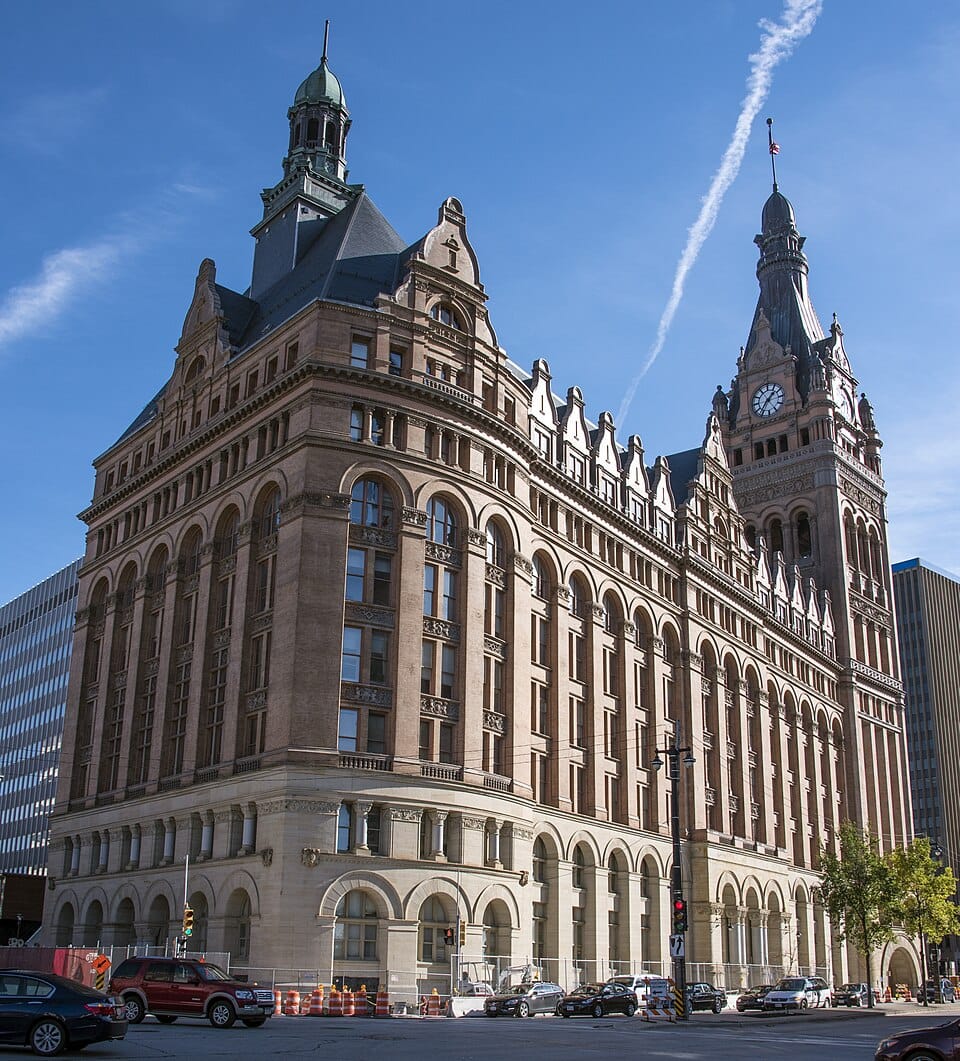
The year was 1893. Two impressive buildings rose up into the Milwaukee air. Each one destined to define the city’s skyline for decades to come. In the center of the growing metropolis was the Milwaukee City Hall. Which for a few years upon completion held the title of the world’s tallest inhabitable building. A few blocks away another landmark officially opened its doors; The Pfister Hotel.
Behind both these projects stood the same architect: Henry C. Koch. Perhaps the singular person responsible for helping establish the aspirations of Milwaukee as a major American city.
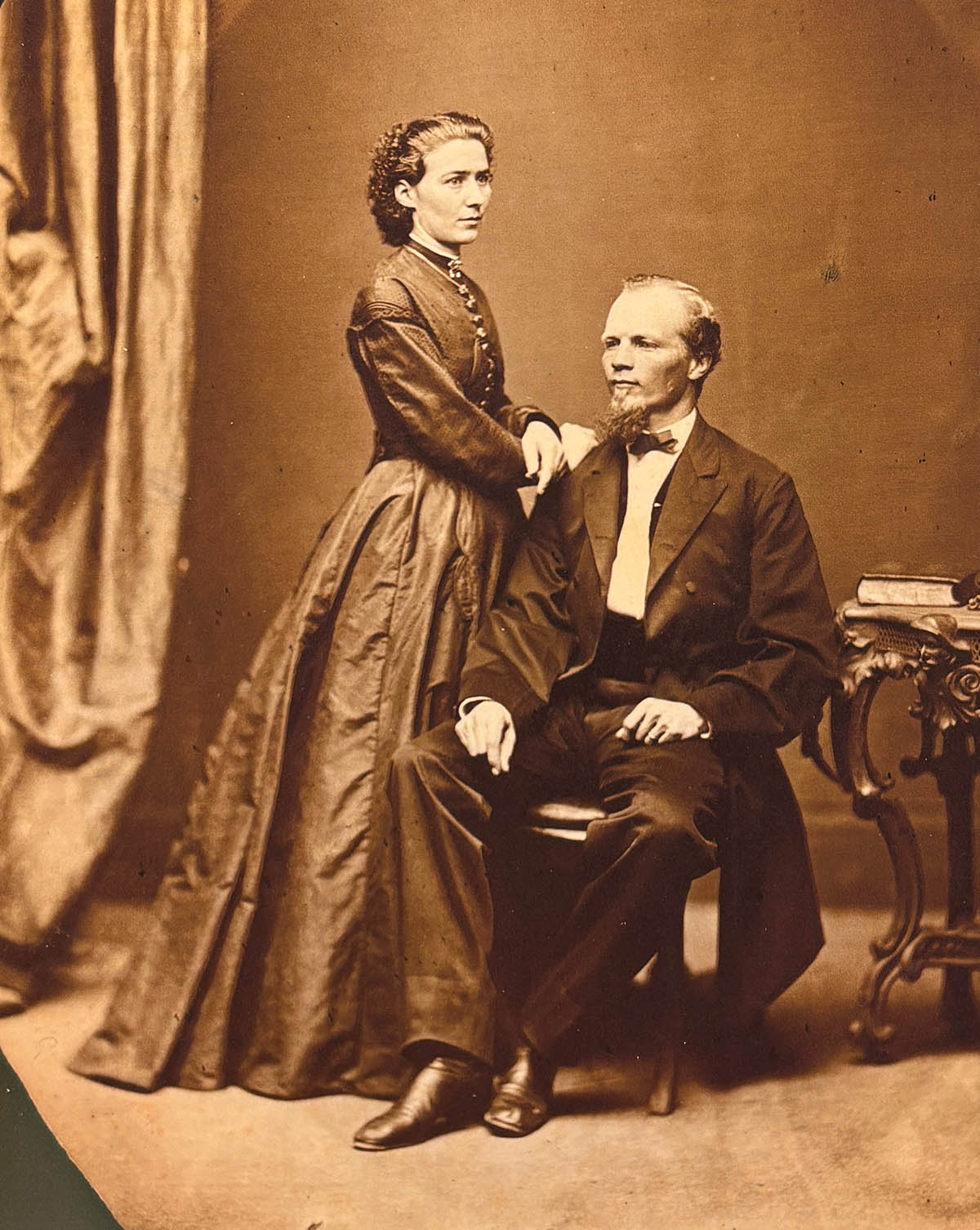
Henry C. Koch (photo courtesy of Wisconsin Historical Society)The Pfister Hotel in 1901 (public domain)
An Architect Forged by War
Henry C. Koch was born in 1841 in Hanover, Germany. He and his family immigrated to Milwaukee when Henry was just a child. At 16 he began working as an apprentice for G.W. Mygatt, a prominent local architect.
Then the Civil War began. Koch enlisted as part of the Wisconsin Infantry and used his talents to draw maps and fortifications. When the war ended he returned back to Milwaukee and established his own independent architecture practice.
In the following four decades, Koch led the design over more than 300 buildings across the Midwest. Of this impressive output it was arguably The Pfister Hotel which was his crown jewel.
“Grand Hotel of the West”
From the onset, The Pfister Hotel was an audacious undertaking. Guido Pfister, the local financial backer of the project, desired a luxury hotel that would be on par with anything in Chicago or the East. Guido died before the project began, but his son Charles continued to carry out the vision and was the one who selected Koch to lead the design.
And what a design it was.
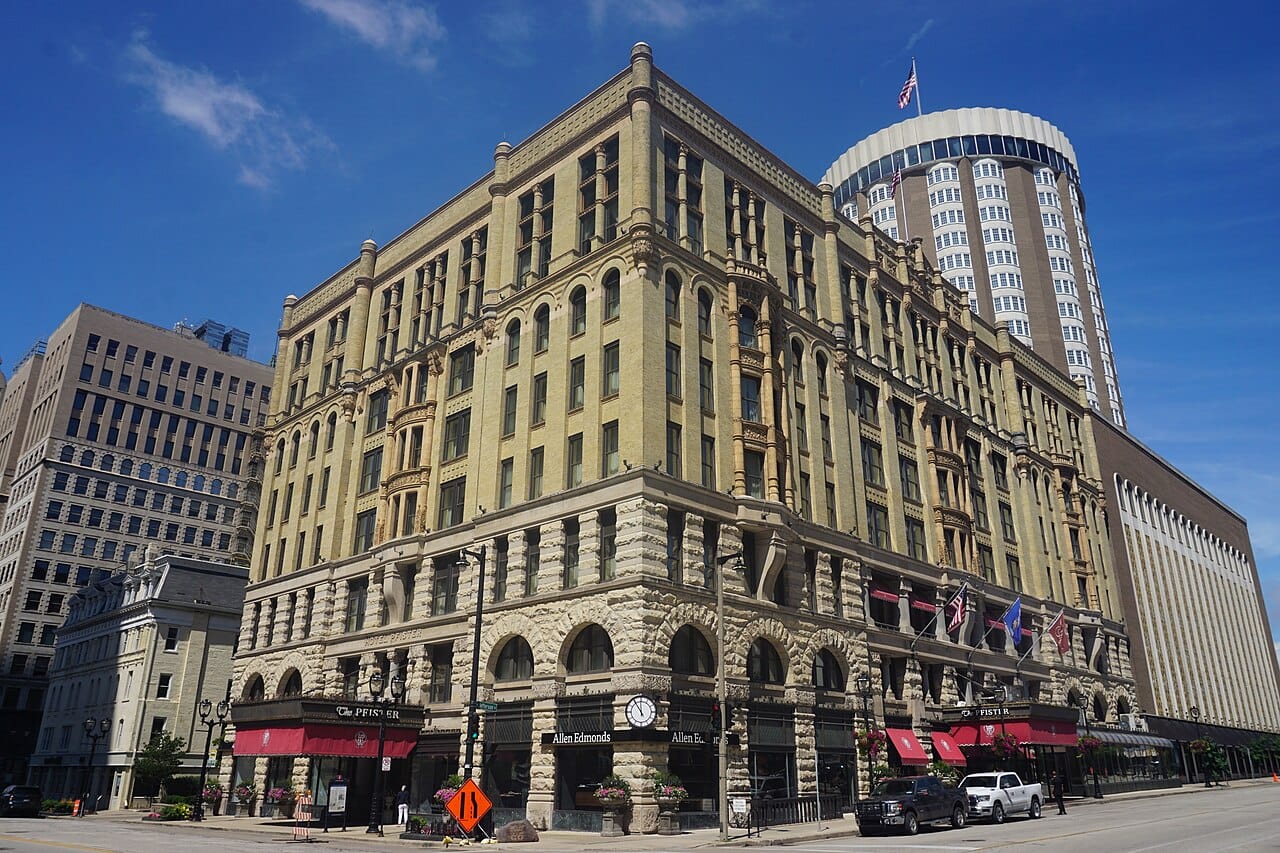
Eight stories of Romanesque Revival construction. A style which was Koch’s trademark and was inspired by medieval European architecture. Symmetry, copious use of stone, semi-circular arches, and simple, yet powerful facades were all traditionally featured.
And for an upstart city like Milwaukee, this made sense. It nodded both to the European cultural heritage that was prevalent, but also signified American confidence.
While the exterior quickly became a city icon, the interior did the heavy lifting of demonstrating modern hospitality touches. Electricity in every room. Individual thermostats controls for guests. Multiple formal dining and billiard rooms. Luxurious carpet throughout. These touches were grand and were collectively revolutionary for the time.
The Pfister Hotel first opened it’s doors on May 1, 1893 to much fanfare and thousands were in attendance to witness at this new marvel. It was billed as the “Grand Hotel of the West.” A fitting distinction that matched the original vision of the Pfister family.
The Pfister Hotel Today
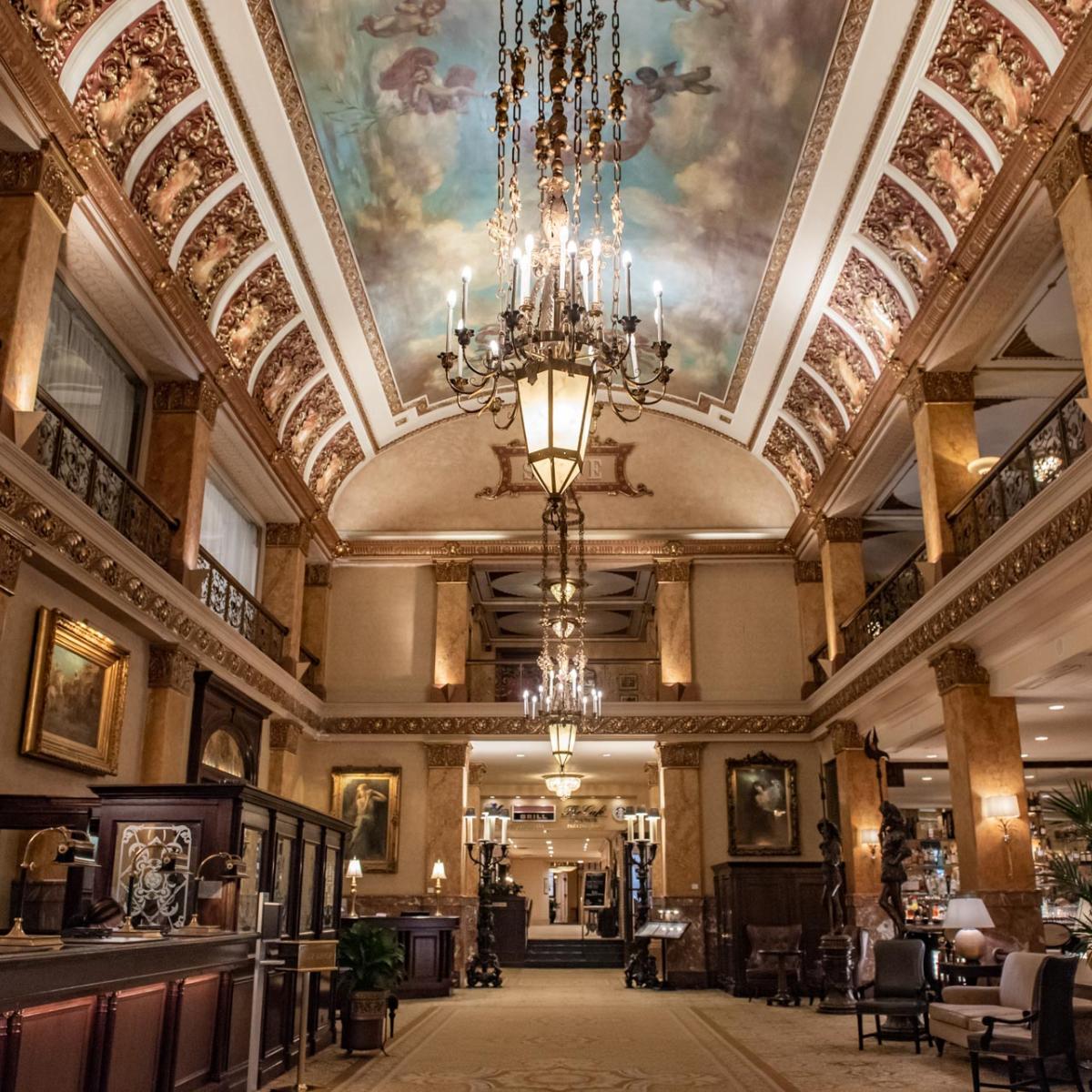
The Pfister in 2022 - note the more modern circular tower in the upper right.The Pfister Lobby (photo courtesy of Preferred Hotels)
The Pfister Hotel still proudly stands in the heart of Milwaukee and lives on as the only nineteenth-century grand hotel in the city. Dignitaries and celebrities from around the world frequently select to stay within this historic hotel when in town and the lobby and restaurants on premise are worth the time.
An additional draw is that the largest Victorian art collection of any hotel in the world is found within the Pfister’s walls.
In more recent years, a 23 story tower was added behind the original structure. At the top of which can be found Blu, a stylish cocktail lounge with some of the best views of the city.
A Milwaukee Legacy
Koch’s fingerprints are still all over the 21st century Milwaukee landscape. Their well-built construction and fundamental role in establishing the civic identity of the region have led many of his creations to be locally beloved landmarks.
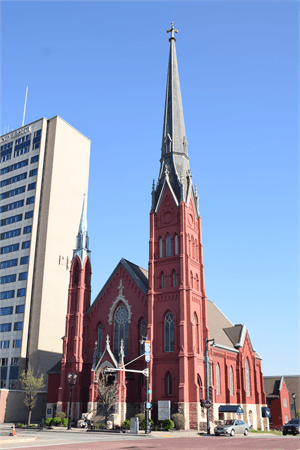
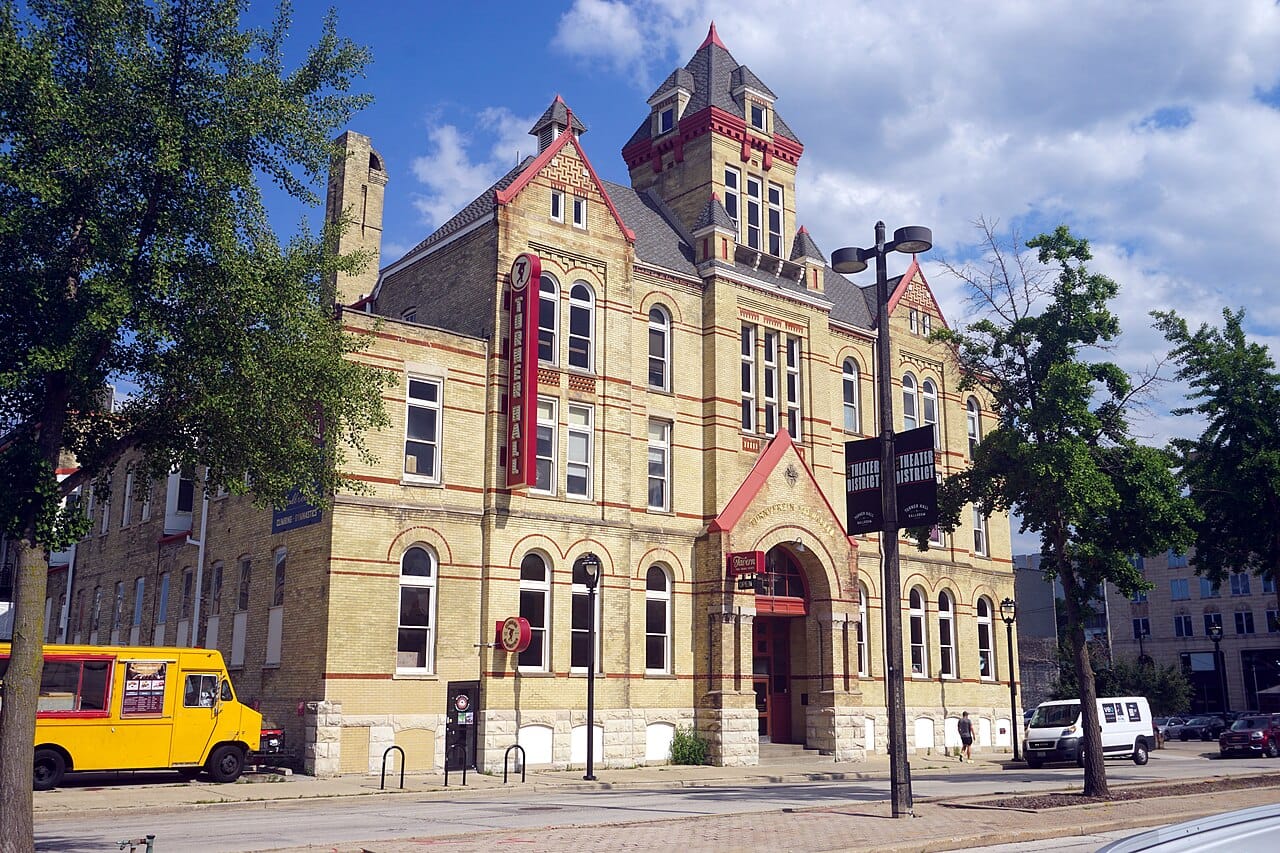
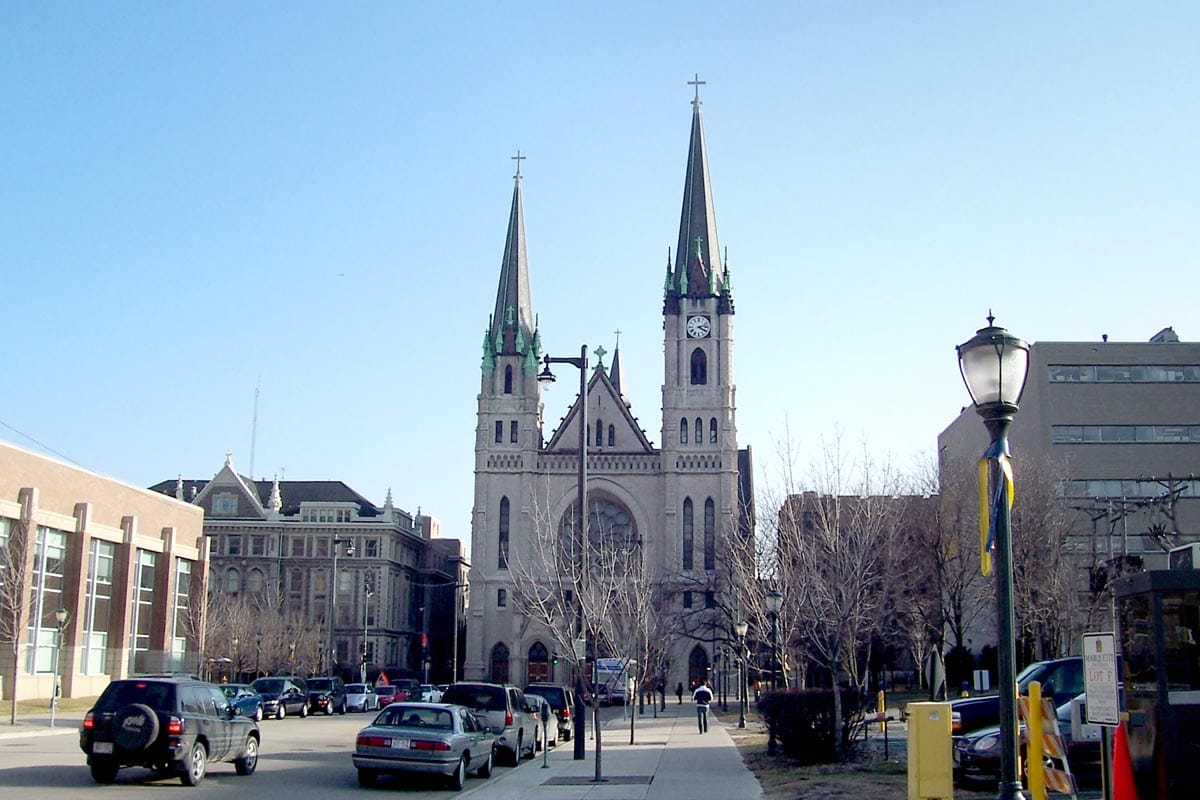
Here are just a few of his notable works in and around Milwaukee.
Henry C. Koch died in 1910, fittingly in Milwaukee, the city he helped put on the map.
Calvary Presbyterian ChurchTurner Hall (photo courtesy of Michael Barera)Gesu Church (photo courtesy of Sulfur)Milwaukee City Hall (photo courtesy of Gillfoto)