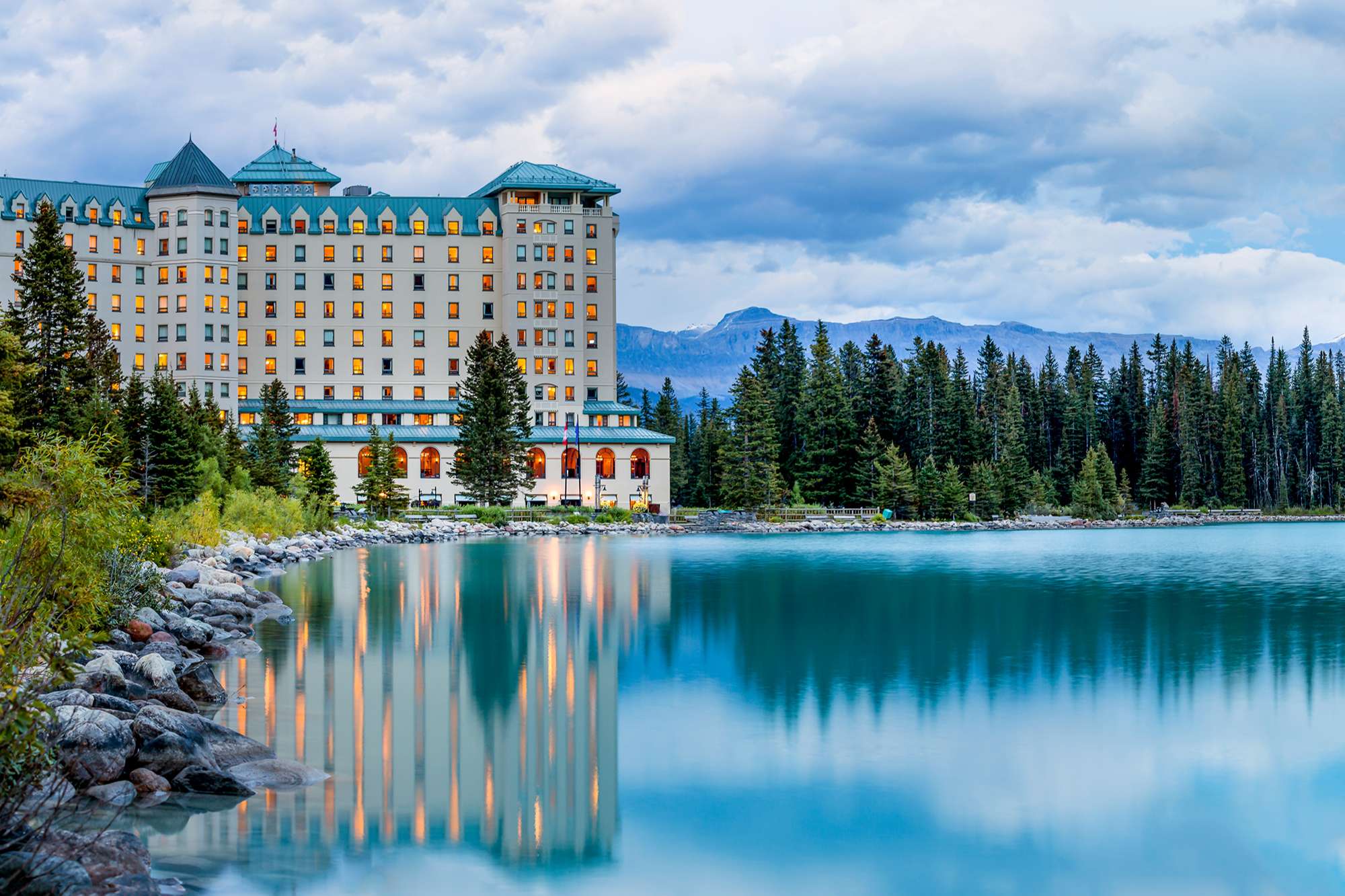
Canadian Pacific Railway manager Cornelius Van Horne had a simple one-room log cabin built on the shore of Lake Louise in 1890, mostly to give rail passengers somewhere to eat and sleep near a lake that had only just been named by a surveyor who mistook a nearby avalanche for the sound of snow-covered mountains. The cabin registered just 50 guests its first year; by 1912, that number had grown to 50,000.
Architect Francis Rattenbury, already known for designing British Columbia’s parliament buildings, extended the growing chateau between 1902 and 1911 in a wood-heavy Tudor Revival style meant to blend into the surrounding forest. On July 3, 1924, a fire broke out in the cook’s quarters and destroyed Rattenbury’s entire wing within hours; staff saved the adjacent Painter Wing by lowering metal fire doors, and the hotel served dinner to 126 guests, with dancing, that same night. During World War II, scientists used the closed hotel’s lake to test Pykrete, an ice-and-wood-pulp material considered for a secret Allied floating-airfield project.